What Is the Library Actually Offering This Fall?
After a summer hiatus, The Colony Public Library at 6800 Main St. has resumed its fall programming schedule, and the breadth of what is now available on the calendar is worth a closer look. The lineup spans early childhood development, creative arts, and structured social support for neurodivergent adults — a range that positions the library less as a quiet repository of books and more as one of the city’s most actively used community spaces.
The resumption of programming follows a deliberate preparation period. Tuesday Story Time and Thursday Music & Movement were both placed on hiatus while library staff readied for the fall season. That kind of intentional pause, followed by a structured relaunch, suggests the library is treating its programming calendar with the same seriousness it would apply to a collection audit or a facilities upgrade.
What Happens During Music & Movement — and Who Is It Really For?
The Music & Movement session, held in the Library Multipurpose Room, is described as a musically driven story time open to all ages. Participants can expect to dance, sing, play instruments, and engage with read-aloud stories in a single session. The format blends literacy with physical and auditory engagement in a way that developmental researchers have long associated with stronger early language acquisition.
The “all ages” designation is notable. Many story time formats implicitly target a narrow developmental band — typically toddlers or pre-K children — and parents of slightly older kids can find themselves uncertain whether a program applies to their family. By opening Music & Movement more broadly, the library avoids that kind of self-selecting exclusion, which tends to keep participation numbers artificially low and leaves some families without a clear on-ramp to library engagement.
For The Colony, a city that has seen steady residential growth over the past decade, programming that can absorb a wider age range without requiring separate logistical tracks is a practical asset as much as a philosophical one.
Can Drop-In Crafts Compete With Screens?
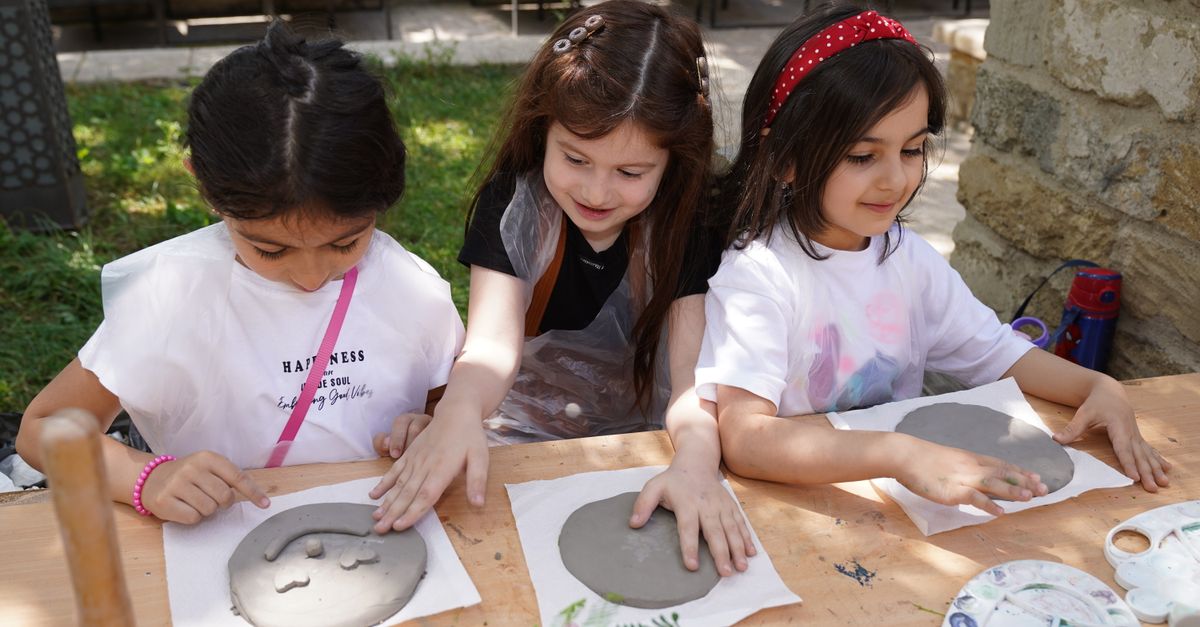
The Creature Creator program, also running in the Library Multipurpose Room this fall, operates as a come-and-go drop-in format rather than a structured session with a fixed start time. Participants make stuffies, pet rocks, pom pom pets, and other handmade companions — the kind of tactile, low-stakes creative work that is increasingly hard to find in environments designed around scheduled, outcome-oriented activities.
The drop-in structure deserves attention. Scheduled programs carry an implicit commitment: you register, you show up at a specific time, and missing the window means missing the program. Drop-in formats remove that friction entirely. For families with unpredictable schedules — and for children who might be reluctant to commit to something unfamiliar — the ability to simply arrive and begin making something has a measurable effect on participation.
Craft-based library programming also serves a function that is easy to overlook: it gives children a reason to be at the library that is not contingent on reading readiness. For a child who is not yet reading fluently, the library can feel like a space that is not quite meant for them. A pom pom pet does not require any particular literacy level to complete, and the connection it builds between the child and the physical library space has longer-term value.
Who Does the Social Safety and Support Group Serve — and Why Here?
Perhaps the most distinctive addition to the fall calendar is the Social Safety & Support group, held in the Library Conference Room and designed specifically for adults with neurodivergence and related social challenges. The group offers structured support from both peers and a facilitator.
Libraries have increasingly become de facto community mental health adjacents — spaces where adults experiencing isolation, social anxiety, or navigating neurodivergent identities can find low-barrier programming without the cost or clinical associations of formal therapy settings. The Colony’s decision to host this group at the public library, rather than through a separately funded social services channel, reflects a pragmatic understanding of where residents already are and what spaces they already trust.
The peer-and-facilitator model is also worth noting. It differs from a purely clinical support group by centering the lived experience of participants alongside structured guidance. For adults who have often found that their social struggles are minimized or misunderstood in conventional settings, a group that foregrounds peer recognition alongside facilitation can offer something that professional services alone do not always provide.
What Does the Hoopla Discontinuation Mean for Digital Borrowers?
Not every item in the library’s September news is an addition. Effective September 15, 2026, TCPL will discontinue access to Hoopla Digital, the streaming and e-lending platform that has allowed cardholders to borrow digital books, audiobooks, comics, and films with no waitlists.
The library stated that the decision followed careful evaluation and consideration, which is the kind of language that typically signals a cost-benefit analysis rather than a service failure. Hoopla operates on a per-borrow pricing model, which means high-volume patrons can make the service expensive for smaller library systems relative to the number of residents who use it regularly.
Patrons who relied on Hoopla — particularly for audiobooks during commutes or digital comics — will need to redirect toward the library’s remaining digital offerings. What those alternatives look like in practice is a question worth raising directly with library staff, who are best positioned to match individual reading habits to available platforms.
The discontinuation does not diminish the overall programming expansion; it is simply a resource reallocation that the library has chosen to be transparent about rather than quietly absorb.
Why Does This Matter for The Colony Specifically?
The Colony sits in a part of Denton County where residential density has increased significantly, and the demographic profile of the city includes a meaningful proportion of young families and working-age adults. A library that is actively expanding its programming into early childhood development, creative arts, and adult social support is responding to exactly that profile.
The 6800 Main St. location is also geographically central enough to serve a broad cross-section of residents without requiring a significant drive. In a city where Grandscape and the Lewisville Lake corridor naturally pull commercial and recreational attention toward the northern and eastern edges, the Main St. library anchor holds its own kind of civic gravity.
What the fall 2026 calendar ultimately reflects is a library that understands its role has expanded. Lending books and providing internet access remain core functions, but the programming slate now signals an institution actively investing in the reasons residents show up in the first place.


